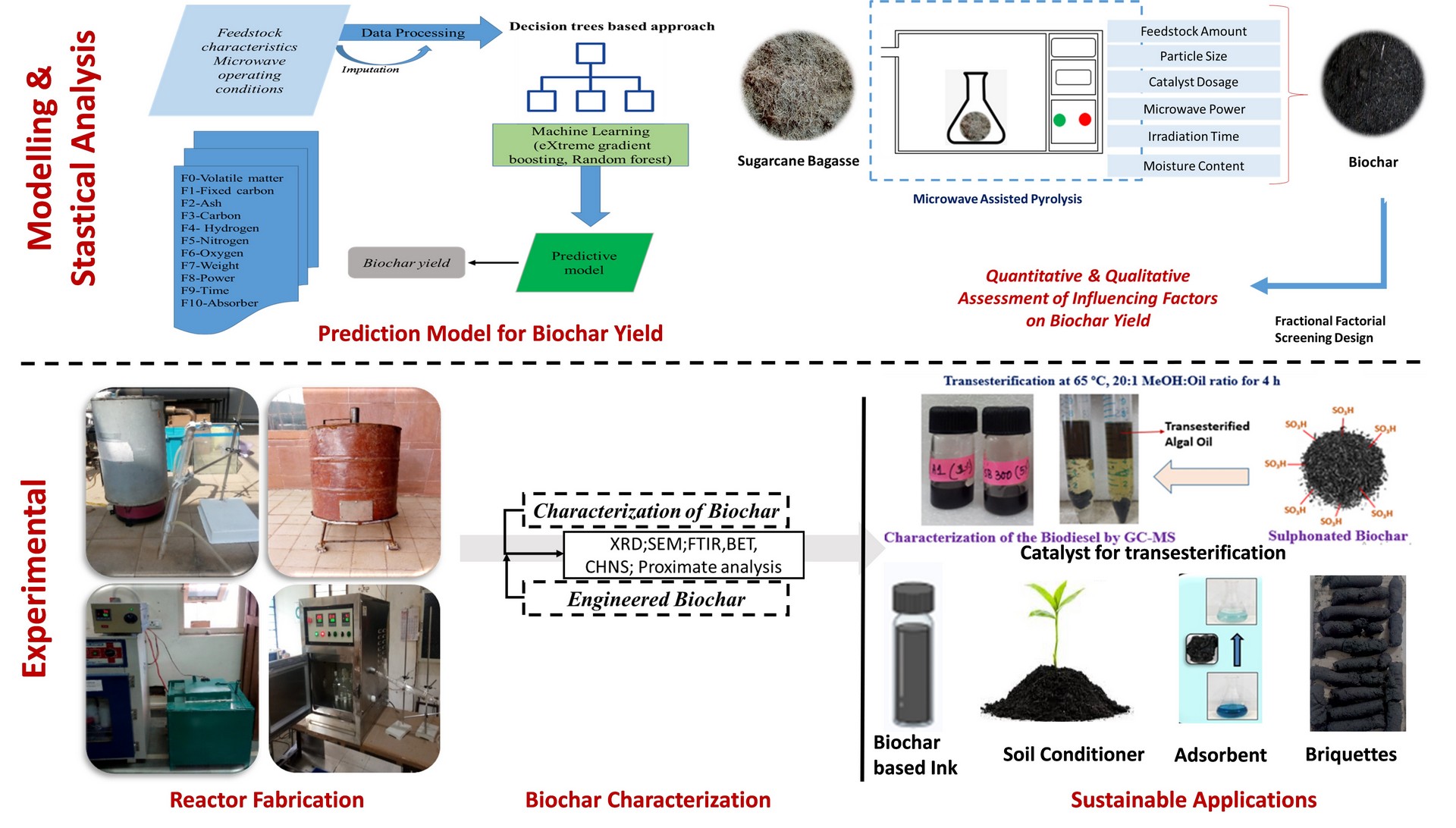
Our research focuses on the sustainable production, characterization, and application of biochar derived from agricultural and industrial biomass residues. Biochar is a carbon-rich material produced through thermochemical conversion processes such as pyrolysis under oxygen-limited conditions. As a versatile bio-based product, biochar offers significant potential for improving soil health, enhancing crop productivity, sequestering carbon, and supporting circular bioeconomy initiatives. At BEE Lab, we develop innovative and cost-effective biochar production technologies that can be adopted at both farm and industrial scales. Our team has designed and demonstrated simple, affordable biochar production systems to enable decentralized biochar generation and utilization in agricultural practices. We also investigate the physicochemical properties of biochar produced from diverse feedstocks using advanced analytical techniques to optimize its performance for environmental and agricultural applications. To advance large-scale production, our laboratory has developed a customized 2 kW multi-mode microwave pyrolysis reactor for the efficient conversion of biomass into high-quality biochar. Current research activities focus on microwave-assisted pyrolysis of agro-industrial wastes to enhance biochar yield, quality, and functionality while addressing challenges associated with soil amendment applications. Beyond research, we actively explore the commercialization potential of biochar technologies and promote their adoption among farmers, entrepreneurs, and industries. Through innovation, technology development, and stakeholder engagement, we aim to accelerate the transition toward sustainable resource management, climate-resilient agriculture, and a circular bio-based economy.
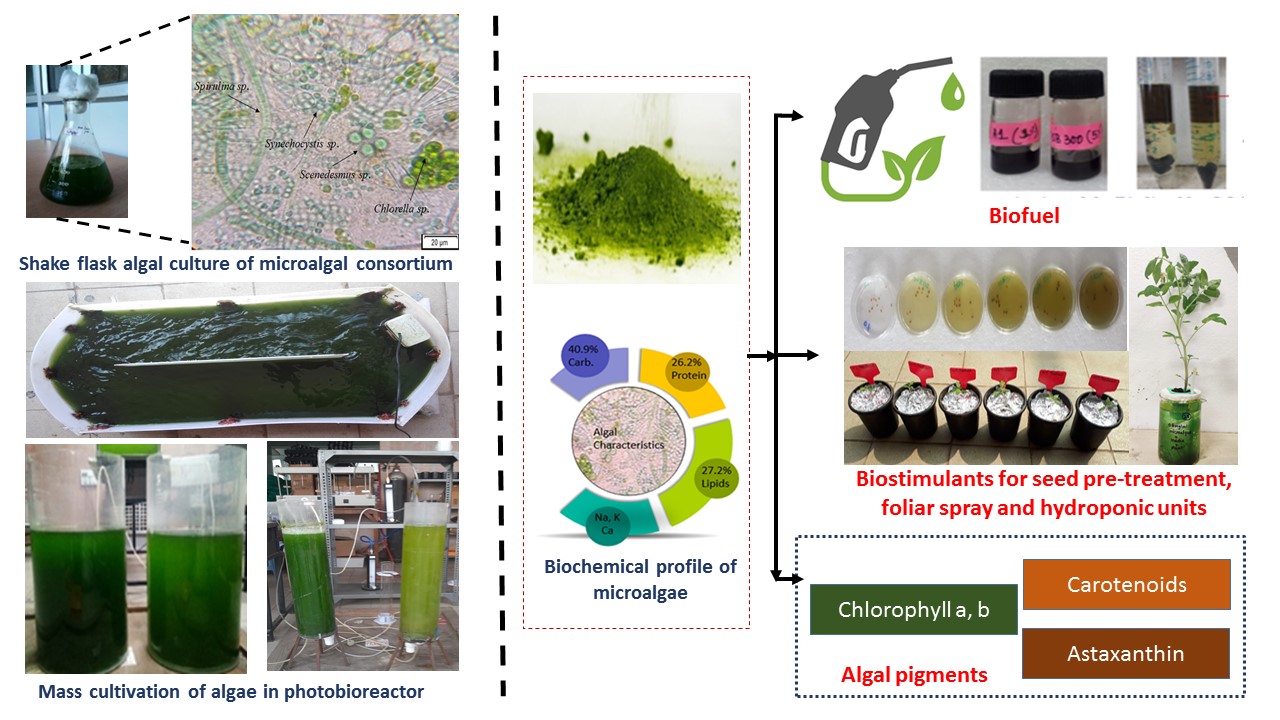
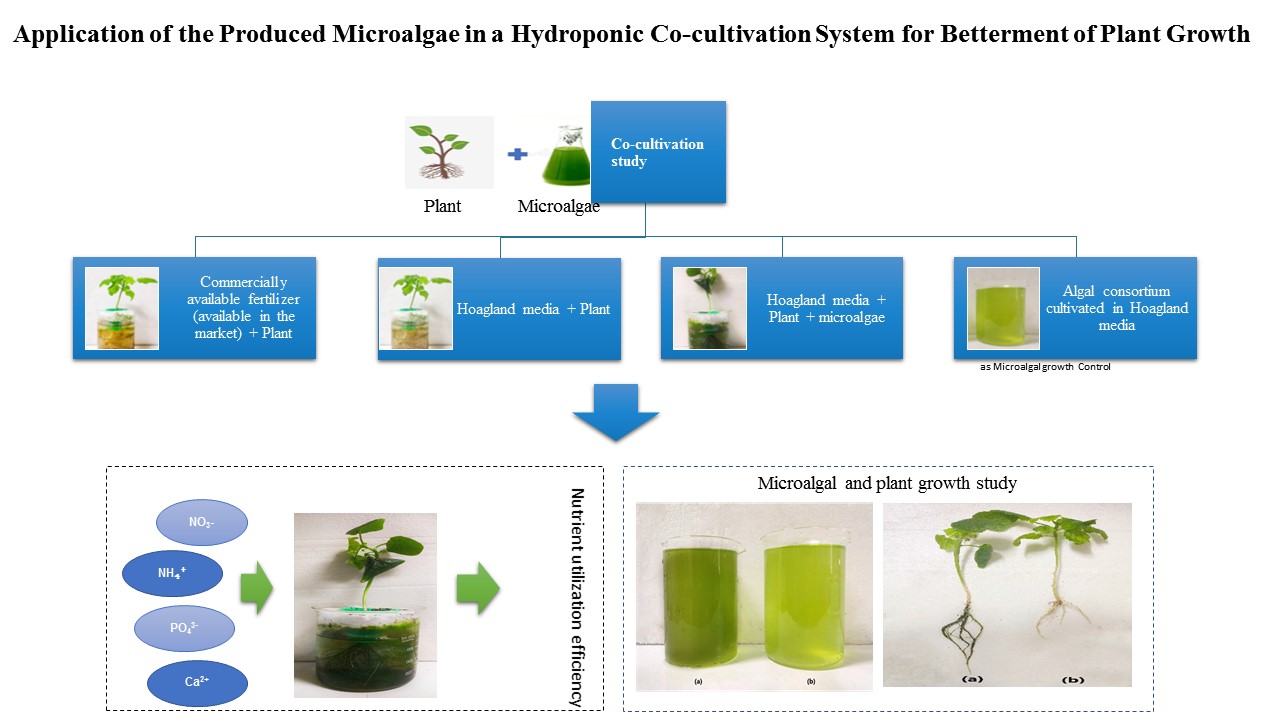
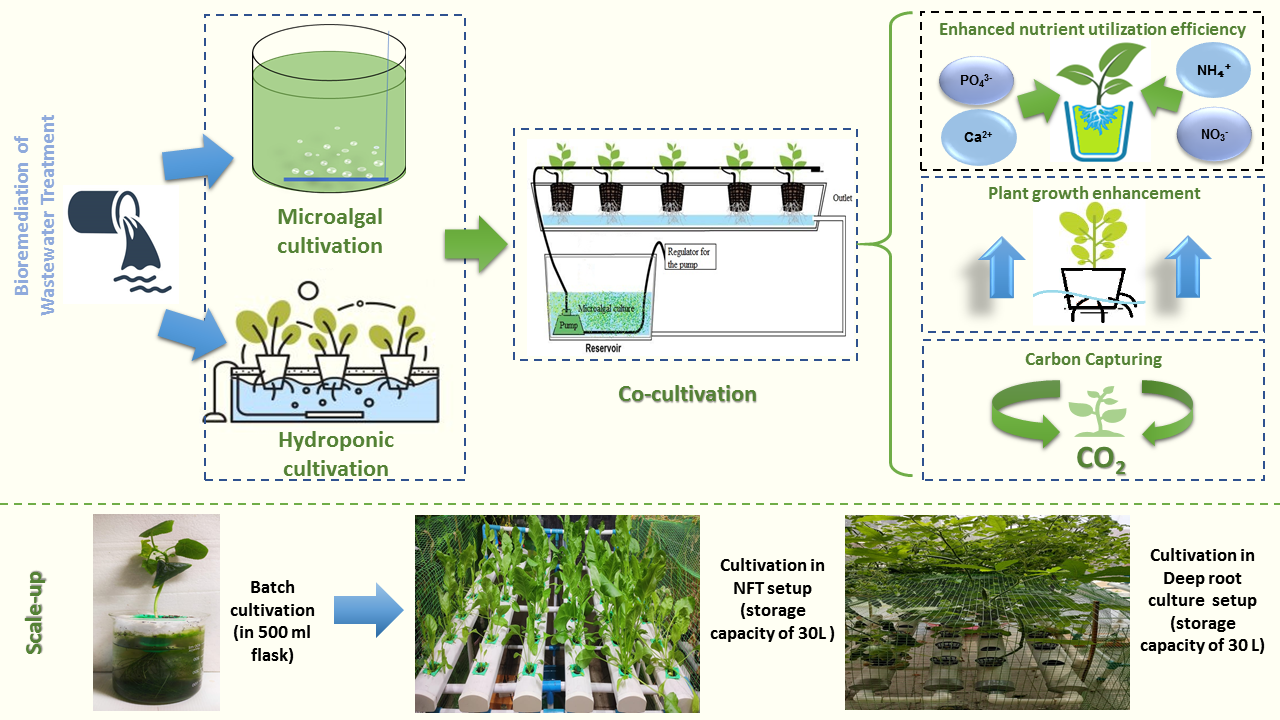
Our research explores the potential of native microalgal consortia as sustainable platforms for renewable energy production, carbon capture, wastewater valorization, and the generation of high-value bio-based products. Leveraging indigenous microalgal communities isolated from wastewater ponds, we develop innovative bioprocess strategies to enhance biomass productivity and maximize resource recovery. A key area of our work involves the development of predictive biophysical and mathematical models that integrate geospatial, biokinetic, and physicochemical parameters to estimate realistic algal productivity under varying environmental conditions. These models have been applied across different regions of Odisha and India to assess the large-scale potential of microalgal cultivation. Our studies have also evaluated the role of microalgae in carbon dioxide sequestration from industrial emissions, including coal-based thermal power plants, coupled with techno-economic analyses to quantify potential carbon credit benefits. The laboratory investigates sustainable cultivation systems using alternative nutrient sources, including nutrient-rich waste streams, to reduce production costs while maintaining high biomass and lipid productivity. Process optimization techniques are employed to improve biomass yield and biofuel precursor production, supporting the development of economically viable microalgal technologies. Beyond biofuels, our research follows an algal biorefinery approach that aims to recover multiple value-added products from a single biomass source. Current efforts focus on the extraction of pigments such as chlorophylls, carotenoids, and astaxanthin, as well as the utilization of microalgae as biofertilizers, seed priming agents, and plant growth promoters in sustainable agricultural systems. We also explore cost-effective harvesting and downstream processing technologies to accelerate the commercialization and large-scale adoption of microalgal biotechnology. Through interdisciplinary research and innovation, we aim to establish microalgae as a versatile and sustainable resource for addressing challenges related to energy, environment, agriculture, and climate change.
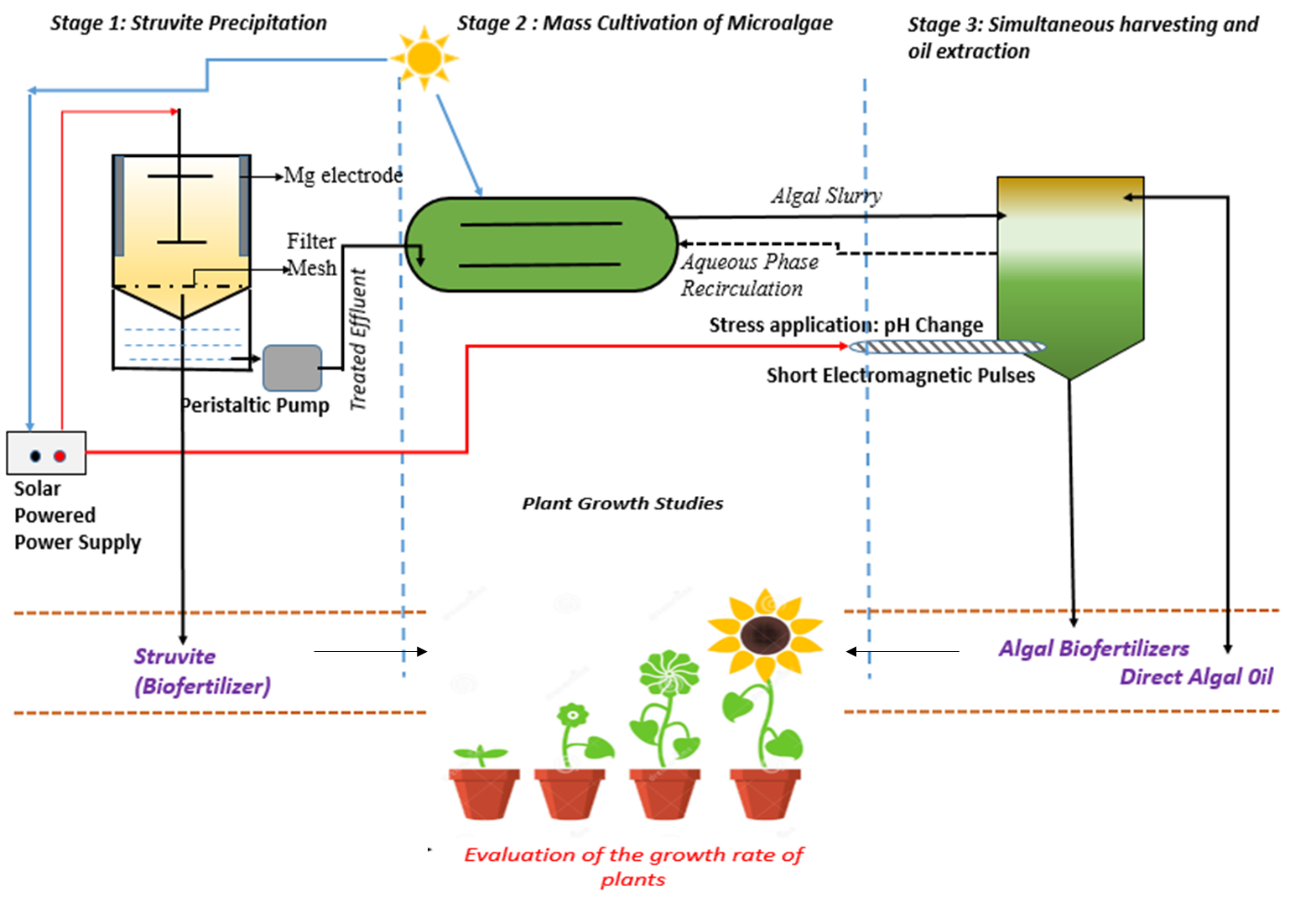
Our research focuses on the recovery of struvite (magnesium ammonium phosphate), a valuable slow-release fertilizer rich in essential plant nutrients, from nutrient-rich waste streams. By transforming waste-derived nutrients into high-value agricultural inputs, we aim to develop sustainable solutions that address both wastewater management and fertilizer production challenges. At BEE Lab, we investigate chemical and electrochemical approaches for struvite precipitation from human urine and other nutrient-rich effluents. Our work emphasizes the design and development of scalable, decentralized systems for efficient nutrient recovery, enabling the production of struvite at both pilot and community scales. These technologies are intended to support localized fertilizer production while reducing nutrient losses to the environment. Through the advanced facilities of our Smart Agricultural Laboratory (SAL), we evaluate the agronomic performance of recovered struvite through nutrient characterization, soil analysis, and plant growth studies. In parallel, we integrate microalgal cultivation with nutrient recovery processes to further enhance resource utilization and promote the closure of the phosphorus cycle. By combining nutrient recovery, wastewater valorization, sustainable agriculture, and circular resource management, our research contributes to the development of resilient food production systems and advances the transition toward a circular bioeconomy.
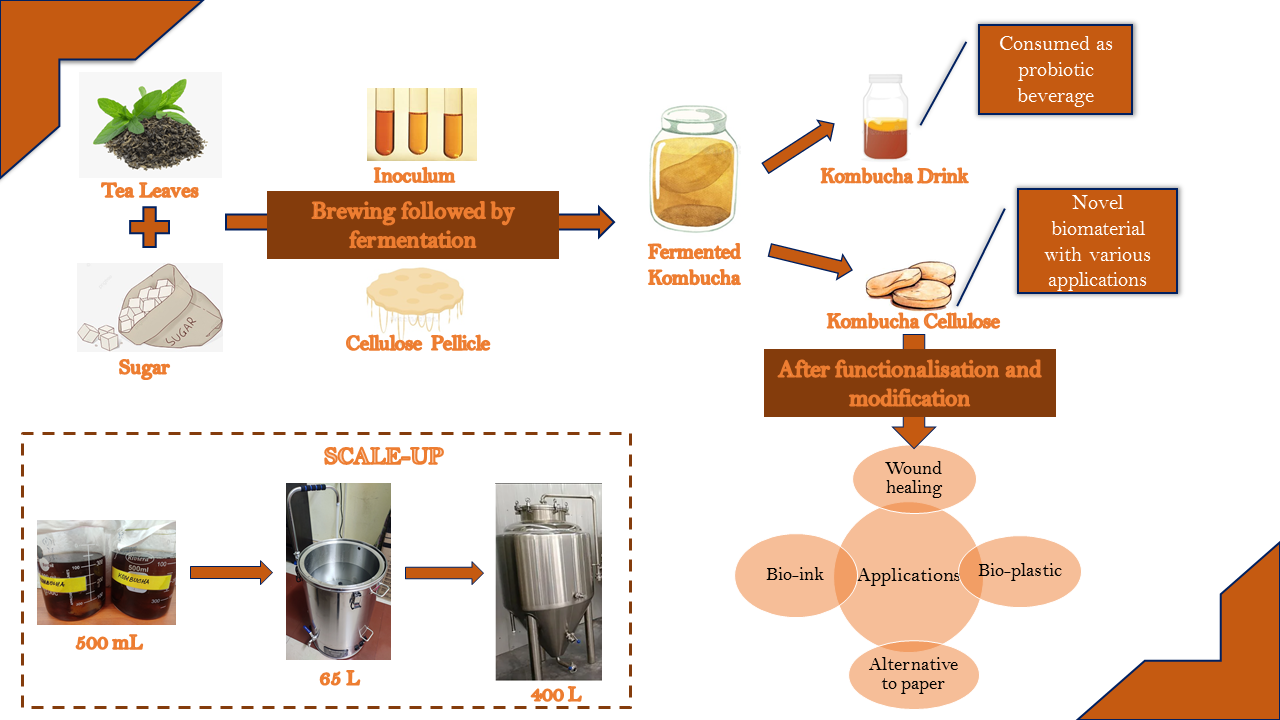
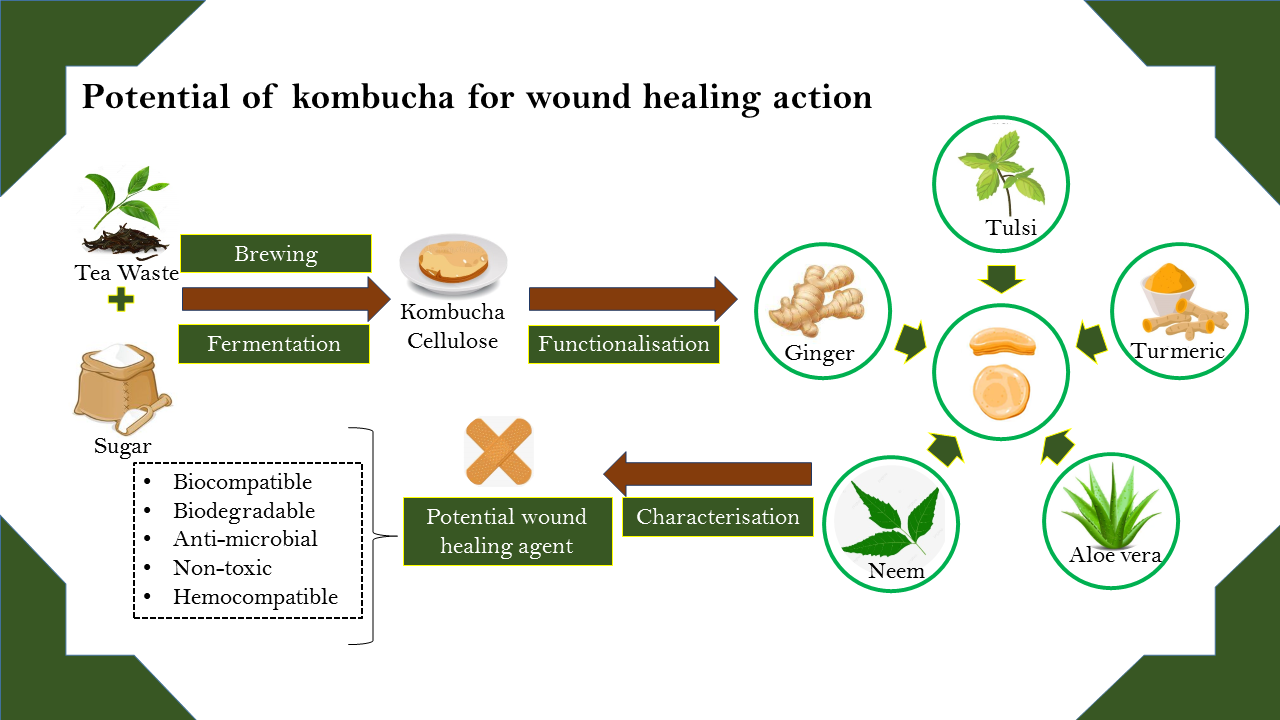
Our research explores the transformative potential of Kombucha and its by-products to develop sustainable solutions at the intersection of food, health, and biomaterials. By harnessing the symbiotic culture of bacteria and yeast (SCOBY), we investigate innovative fermentation strategies for producing functional foods with enhanced nutritional and sensory attributes, including next-generation sourdough products with reduced processing time and improved quality. A major focus of our work is the valorization of Kombucha-derived bacterial cellulose (KBC), a versatile biopolymer with remarkable physicochemical and mechanical properties. We develop value-added applications of KBC for biomedical uses such as wound dressing materials, while also optimizing processing techniques to preserve and tailor its functionality for diverse industrial applications. Our research further advances sustainable biomanufacturing through the utilization of low-cost substrates and food processing wastes for Kombucha production, supporting circular economy principles and reducing production costs. We integrate process optimization, machine learning, and techno-economic assessment to facilitate the scale-up and commercialization of SCOBY-based technologies. In addition, we investigate the development of bio-based materials for environmental remediation and resource recovery, demonstrating the broad applicability of Kombucha-derived products beyond the food sector. Through an integrated biorefinery approach, our goal is to transform fermentation by-products into high-value functional products that contribute to sustainable food systems, healthcare innovations, and a circular bioeconomy.
 Completed
 DST
DST
 36 months
 Co-Investigator
Completed
DST
24 months
Principal Investigator
Completed
DST
24 months
Principal Investigator
Completed
BIRAC
18 months
Principal Investigator
Completed
SERB
36 months
Principal Investigator
Completed
DST
36 months
Co-Investigator
Completed
SERB
24 months
Principal Investigator